I was pleased to attend at least the beginning of the Shop Stewards’ Conference called today by the RMT Union, which took the sensible and timely decision to launch a national shop stewards’ network across all unions. Bob Crow of the RMT launched the Conference with a stirring call for rank and file organisation, although perhaps without clarity about the political organisation which we need to go alongside this.
Brian Caton from the Prison Officers’ Association (POA) spoke movingly and convincingly abut the need for trade union rights which is demonstrated by the experience of the POA. Paul Mackney from UCU gave what may well be his final speech as General Secretary to such a meeting and made a point of backing John McDonnell’s campaign for Leader of the Labour Party.
Barry Camsfield, Assistant General Secretary of the TGWU was obviously pleased to give the greetings of General Secretary, Tony Woodley to the Conference and called for work on the ground to build the shop stewards movement. Steve Kemp of the National Union of Mineworkers (NUM) emphasised the importance of solidarity action in the history of our movement, of which the NUM are so much a part.
Jeremy Dear, General Secretary of the National Union of Journalists praised the role of his members on the Daily Star who had taken completely unlawful industrial action to prevent the publication of an outrageously Islamophobic supplement. This seemed to underline the importance of workers being prepared to break the anti-union laws if we are ever going to get them repealed (and win the battle for a Trade Union Freedom Bill).
Although I had to leave (for the AGM of Labour Left Briefing) before the close of the meeting I am glad to learn that the National Shop Stewards Network has been established and wish the two UNISON comrades on the steering committee, George Binette and Len Hockey, all the best for the work they will be doing to help to build this important initiative.
Saturday, October 28, 2006


Who'll put the clocks back?

One of the things I like about working in local government is that, as well as the poor pay and having less protection for our pensions than other public servants, we get to be subject to daft Government initiatives.
Thatcher famously brought us ratecapping and abolished authorities she disagreed with. New Labour then came up with elected mayors, an idea rejected by the electorate in the great majority of places where they were asked. Never one to let the democratically expressed wishes of the people get in the way of some daft reactionary nonsense, Ruth Kelly wants to resurrect the idea.
If the Government want to do really stupid things they should do it properly. I notice that the Tory controlled Local Government Association don’t want to put the clocks back (must be trying to prove they are all forward looking Cameroonies?)
So, let’s have elected mayors for every local authority all in charge of their own time zone! Then they can all put the clocks back to wherever they want.
I am happy to offer this network to the New Local Government Network, who – after all, are probably working on a way of privatising time completely (sorry, I mean “modernising time through a partnership approach…”)
This has all the hallmarks of current Government thinking after all, it doesn’t make sense, it won’t improve public services and it will cause chaos – but no one could say it wasn’t radical! And when Ruth Kelly achieves the political oblivion which must surely be her destiny, she can be an elected major for some poor deserted little village somewhere and put the clocks back to the Middle Ages.
Tuesday, October 24, 2006
Black History Month
I’m pleased to blog this from the UNISON Greater London Regional Black History Month event. UNISON is organising events around the country to mark Black History Month and has an online guide to organising events.
As I write I am listening to the GLA jazz band – the day has to be worthwhile just to see Rahul Patel, leading UNISON Regional Committee member dressed up in cultural attire. If only I had a camera!
As I write I am listening to the GLA jazz band – the day has to be worthwhile just to see Rahul Patel, leading UNISON Regional Committee member dressed up in cultural attire. If only I had a camera!
Monday, October 23, 2006
Lobby MPs to defend the LGPS!
Here is some information about lobbying MPs in relation to the local government pension dispute... (all shamelessly lifted from official UNISON sources)
Lobbying is using your right to meet your MP as one of his or her constituents. You can do this either in your constituency or by visiting Parliament. There will be a mass lobby on Wednesday 22 November 2006 to defend the Local Government Pension Scheme (LGPS). UNISON, TGWU and CYPS want as many members affected as possible to attend. With luck other unions will be coming on board.
An MP should regard you as a constituent, whether you voted for them or not. MP’s are meant to “represent” each constituent’s interests. This does not mean that they have to agree with you – after all each MP has up to 90,000 constituents – but it does mean they should listen and be prepared to pass on your views to the Government.
You should therefore use a meeting with your MP to try to:
Give them the information they need about the LGPS
Influence their views
Persuade them that many other constituents share your concerns
Ask them to pass on your concerns to the Government, and
Ask them to take appropriate action (some are suggested below) to show that they support you
If you are disabled, please telephone the Serjeant-at-Arms’ office at the House of Commons, who will advise you of procedures for entering the building. (Phone 0207 219 3000 and ask the switchboard to put you through to the Serjeant’s office). The Serjeant’s office do allow some parking where it is required by disabled people, but individuals will need to verify this with the office. It is usual for one of your MPs’ staff to accompany you once you enter the building. You will need to arrange this with your MP in advance. Please notify UNISON (via your branch) if you have any special ambulatory needs or require any assistance.
Courtesy of UNISON here is the text for a letter to send your MP in order to arrange to meet them during the lobby of Parliament on 22 November to defend LGPS. Apologies to those not in the LGPS for this post, but this is pretty important to the very many of us who are! (If you don’t know who your local MP is then click here)
“Your MP
House of Commons
London
SW1A 0AA
Dear MP
Local Government Pension Scheme (LGPS): Mass Lobby of Parliament – 22 November 2006
I will be attending the LGPS Mass Lobby of Parliament on Wednesday 22 November. I would very much like to meet you on that day to discuss the concerns of LGPS members who live and work in your constituency about the proposals for the future of the LGPS and protection of existing members.
I do understand that it can be hard to make firm appointments on days when a large number of people are seeking to lobby their MP, so the organisers of the LGPS lobby are doing what they can to provide different ways for MPs and constituents to link up :
The lobby is using Methodist Central Hall – Lecture Hall as its base for the day. A room will be available there for lobbyists to meet MPs or…
· You may wish to make an alternative arrangement to meet me in one of the Parliamentary outbuildings
I would be grateful if you could let me know if you are available on 22 November and suggest a good way of making sure we can meet.
I and my union are very concerned about the response by the Local Government Employers and the Local Government Association to the DCLG options for “new look” LGPS from 2008. They want us to pay more for a worse pension scheme, with less protection than other public sector workers.
I look forward to your reply and to meeting you.
Yours etc.”
Send this letter on or before 10 November (now is good!) and then tell your UNISON branch that you have done so and want to go on the lobby on 22 November.
When you do meet your MP;
Ask your MP to:
· Raise your concerns with DCLG and Treasury ministers by meeting them and by writing to them
· Speak to LGA members, LGPS employers and councillors who run LGPS funds in their constituency
· Arrange meetings with LGPS members in their constituency through UNISON to carry on the discussion
Sunday, October 22, 2006
Coventry single status struggle continues

I won’t go on at length here about the important dispute in Coventry where UNISON members are taking strike action over the way their employer is implementing single status.
You can read the very latest news from the dispute here. You can visit their picket line blog here. Other UNISON branches need to check out the Coventry branch request for donations here.
Good luck comrades!
Saturday, October 21, 2006
Where are we at with local government pensions?
I hope that some of these personal views about the Local Government Pension Scheme (LGPS) dispute will be published this week in Labour Left Briefing.
Following the October 2005 exclusion of a million and more local government workers from the deal to protect the pensions of current public service workers, we took the largest strike for 80 years on 28 March this year. This unprecedented pan-union strike action showed that, even isolated from other public service workers, members of the local government pension scheme are a large group with the ability to take effective strike action.
Shortly after the strike, and in the run up to the May local elections, the unions agreed to defer further strike action in return for a promise of negotiations. At UNISON’s local government Conference in June delegates were narrowly persuaded not to reverse this decision on the strength of the union having sought a judicial review of the Government’s alleged reliance on age discrimination regulations to justify their proposed reductions in our pension rights.
Now that the judicial review has failed ignominiously and the promised negotiations have come to nothing we are back where we should have been in April, needing to step back up the pressure on the Government and the employers. Many activists are justifiably critical of the tactics employed by the small group in charge of the dispute hitherto, but these criticisms are far less important than the need to mobilise our members for future action.
Activists are pressing for a special local government Conference to consider how to take the dispute forward. This is a sensible demand. It will certainly be essential that there is a Conference before any ballot of members on a new pension scheme, so that any recommendation in a ballot is decided democratically by rank and file activists.
However, it seems most likely that the Government will table draft Regulations in November which will be so unsatisfactory that there will be no controversy within UNISON about the need for a further industrial action ballot. Indeed strike action looks likely early in the New Year.
We need to maximise the political impact of further industrial action and it is therefore good news that UNISON is already encouraging members to engage in further letter-writing and to support a lobby of Parliament on Wednesday 22 November.
We should also make effective use of our Labour Link by not only withdrawing support from leadership candidates who will not back our fight for our pensions, but by actively supporting John McDonnell, the leadership candidate with a track record of support for UNISON members and our issues.
More than anything else however, we need to be preparing for serious and sustained strike action to defend our pensions.
Friday, October 20, 2006
You off then? Bye!

Cheerio then Clare Short. She has given up the Labour whip in order be able to speak her mind. With her track record this could lead to some interesting disagreements (with herself). I still remember the hatchet job Clare did on the excellent socialist, Liz Davies – and the fact that she managed to mislay her conscience during the Iraq war.
Clare’s criticisms of New Labour are well-founded, but the place to contest these is (in my opinion) very much within the Labour Party, where a consistent socialist is challenging for the leadership.
All in all then, only worth a very “short” post on the blog.
Did Thomas Hobbes sum up Clare’s career?
How much does Gordon Brown care for health workers?

It was only the other day I was complaining here about the plans of the local government employers to offer those of us who have the pleasure of working for them a pay rise of 2% to make up for our pay falling behind increases in the cost of living.
Now we learn that the Chancellor of the Exchequer wants health workers to get a miserly 1.5%. That’s well below the rate of inflation (in other words a cut in “real pay” – the purchasing power of earnings). The RCN aren’t wrong to describe this as a “slap in the face for nurses” but it is actually a slap in the face for all those whose pay is set by review bodies – and will set the tone for negotiations for the all other health service workers.
So much for social partnership? (Andy Burnham told a meeting of the NHS Social Partnership Forum last week that health staff “have delivered real improvements for patients in important areas such as waiting times and the big killers. I would like to thank all staff for their role in delivering these improvements and for providing good and safe patient care”.) 1.5% of thanks to go with the job cuts and privatisation.
Karen Jennings, UNISON Head of Health sums up the value of this pay offer rather well in today’s Guardian; “A 1.5% pay increase works out at less than 2p an hour extra for newly qualified nurses and paramedics.”
Still lets not blame the insignificant New Labour bag carriers when the responsibility for the latest attack on health staff belongs to Gordon Brown. Yes, that’s Gordon Brown who emphasises “listening, learning and working together”…
How many more attacks must Brown launch upon us before we remember who our real friends in Parliament are?
Still, no one can say Brown doesn't give tuppence for health workers I suppose...
Thursday, October 19, 2006
Regional Education and Training Committee
As I sat down at the start of the this morning’s meeting of the UNISON Greater London Regional Education and Training Committee, Vice-Chair Phoebe Watkins said to me “you’re not going to blog about this are you?” Well, I wasn’t going to, but…
Since a small but growing number of UNISON activists in Greater London are reading this from time to time, I’ll tell you what happened at the meeting.
First, we agreed a budget for next year – and it emerged that we have yet to spend any of the £3,000 set aside this year for bursaries for UNISON members in the Region undergoing courses of study relevant to the union movement.
A circular has gone out to branches at some point – if you are a UNISON member in Greater London and want to find out more, ask your Branch Secretary, who can get more information from Regional Education Officers, Les Perkins and Martin Smith.
The Committee agreed to start charging branches for lunch on training courses where this is provided. The cost is only £7.50 per head a day and this is necessary in order to avoid overspending on the budget from HQ to run training courses.
We get a smaller budget per capita than other Regions because (obviously) we don’t generally need to provide for residential courses – since we all manage to travel from home to work in Greater London there is rarely good cause for a London Region activist to need accommodation in London to attend a meeting or training course (there are of course exceptions for branches which organise nationally before anyone points that out to me – and special circumstances may sometimes apply).
We therefore need to charge branches for lunch (but this does mean that they won’t need to pay subsistence expenses claims to their members attending courses!) If you want to download the current training course prospectus (which will take a little while as it is more than one megabyte) then click here.
The Committee also had a full and lengthy debate about the development of the Union Learning Agenda and agreed to put current workplace learning agreements on the Regional website and to ask Regional Service Group Committees to encourage branches to develop their work in this area.
There are considerable opportunities to recruit and organise our members through work on learning, but examples of good practice are fewer than we would like. Branches need to give some priority to coming to formal agreements with lead employers in order to drive this work forward.
The meeting also considered a verbal update on the contribution made by our education team to work being done to organise migrant workers. In particular we commended the excellent work being done around our unique provision of workplace courses on English for Speakers of Other Languages notably with members working in the privatised sector in the Westminster local government branch, where leading Regional Committee member Rahul Patel (co-Chair of the Regional Diversity Forum) is Branch Secretary.
Finally, as an item of any other business, Regional Education Officer, Les Perkins shared the welcome news that the Region is to develop a training course for reps dealing with capability cases. Given the recent worrying news from OFSTED this comes not a moment too soon!
Full marks to Committee Chair Christine Bailey who got us through the agenda it time for me to have lunch (and blog).
Support National Gallery strikers!

Congratulations to PCS members at the National Gallery who took strike action yesterday.
Staff are angry about management's plans to impose changes to contracts including withdrawing the three days holiday they receive in exchange for working Christmas Day, Boxing Day and New Year's Day and replacing this with two days unpaid leave.
The warders, who protect one of the finest collections of paintings in the world, are among the lowest paid in the culture sector, earning as little as £13,562 a year with many earning a basic rate of pay of just over £6 an hour.
While they are preserving the nation’s treasures they are hardly treasured themselves!
As part of their continuing campaign the staff will be staging walkouts every Wednesday from 6pm to 9pm, so those of us who work nearby in Central London should be able to get along and show some support!
If anyone doubts the importance of looking after art treasures properly have a look at today’s news…!
Wednesday, October 18, 2006
Extending union democracy?
Are we going to return to the debate around election of officials within UNISON? The current review of UNISON structures provides an opportunity to think seriously about many issues.
Our comrades over at AMICUS Unity Gazette have published a cogent justification for their position in favour of election of union officials. I think that there is a compelling argument in favour of the election of all those officials who negotiate on behalf of trade union members, and that UNISON does not benefit from the fact that we appoint rather than elect all our officials other than our General Secretary.
One possibility within UNISON would be for branches and members who favour the election of officials to comment in response to question A5 on the UNISON consultation document to point out that one form of flexibility which would be possible would be to pilot the election of officers.
Of course the current UNISON leadership will not entertain this possibility of electing officials. Indeed sustained effort will be made to exclude even the possibility of debating this issue at our Conference. If we want to have this debate we need to think seriously about how to jump the procedural hurdles which we know will be put in our way.
If anyone out there thinks we should be continuing this debate then please get in touch!
Safe in her hands???

Help! Our health service is in the charge of someone who is clearly not of this planet.
Patricia Hewitt has today said how well the Government is doing in improving the health service!
Geoff Martin knows what health workers think about this nonsense.
You don’t get 7,000 people demonstrating in Haywards Heath because everyone is so chuffed with the Government’s stewardship of our health service!
We need to get along to lobby Parliament on 1 November in order to express our opposition to cuts and privatisation in the health service. This is not just an issue for health workers, and all trade unionists should support the lobby.
The union movement also needs to go beyond fighting attacks on public services sector by sector. We need to support a unified campaign against privatisation across all our public services.
Branching out blogging...
I am pleased to report that I have finally got round to sorting out the UNISON branch blog for Lambeth UNISON – so we are only a couple of months behind those trailblazers in Barnet branch. We may not have quite as much activity to report as Coventry branch just at the moment, but I hope we will find a blog a useful organising tool.
Tuesday, October 17, 2006
If your face doesn't fit...
Just when you think the Government cannot do anything more foolish and illiberal than they already are – they come up with this!
According to proposals drawn up by the Department for Education and Skills, ministers are to ask higher education staff to spy on "Asian looking" or Muslim students, informing special branch of anyone they suspect of being involved in Islamic extremism.
Do they not remember having passed the Race Relations Amendment Act and giving public bodies enhanced duties to oppose such blatant discrimination?
Public servants have enough work to do delivering services that make a difference to people’s lives, without being roped in to this racist witch hunt by New Labour in its dangerous dotage.
With this sort of rubbish promoted by the Government it’s no wonder that, as UNISON Conference noted this year two-thirds of incidents of religious hate crime are targeted at Muslims, and surveys produced in the last two years have revealed that nearly 80 per cent of Muslims in the UK have experienced discrimination because of their faith.
Full marks to Paul Mackney of UCU for opposing this nonsense.
This makes me think that we need a socialist candidate for leader of the Labour Party…
Sunday, October 15, 2006
UNISON structures consultation - get commenting
Having just posted about something radical and fun, I thought I should resume normal service on the blog. UNISON activists need to be aware of the current consultation on the review of branch and service group structures.
This review was agreed at last year’s Conference. The NEC development and organisation (D&O) committee established a steering group to implement motion 6. The steering group includes members from the D&O committee, service groups, regional convenors, as well as key officers. They have met regularly since autumn
2005 and have been looking at branches, the role of service groups, new ways of organising, trade union developments elsewhere, as well as the future direction of public services. (I did try to get on the working group but my NEC colleagues had other ideas!)
A recent survey of UNISON members indicated that members needing their union were most likely to approach a local workplace rep (a shop steward) and that those seeking the help of the union were most likely to be satisfied with help from their shop steward. At present the Union organises shop stewards primarily through our branch structures. The consultation document (linked to above) asks a series of questions. Regions are being asked to coordinate consultation, but there is nothing to prevent branches responding directly.
The results will be considered by the project steering group, who will make recommendations to the NEC’s D&O committee. A report will be prepared, on behalf of the NEC, for national delegate conference 2007.
The deadline for the current consultation is 31 December.
Mark Thomas - see him if you can!

I’ve just come back from seeing the excellent Mark Thomas. He has taken comedy and grafted it onto political activism in a totally brilliant way. He has applied comic genius to the Government’s absurd restrictions on the right to protest outside Parliament. You can join in monthly mass protests of individuals each registering their own individual demonstration with the Police – the details of what to do are here.
Mark explains this on his website as follows;
“A recent law has made it illegal to demonstrate anywhere near Parliament without official police permission, and Mark is organising MASS LONE DEMONSTRATIONS to highlight the danger and stupidity of having this law in a democracy. The law is essentially a ban on demonstrating as there is no point demonstrating in a location where the people you want to know about your protest cannot see you! And, as everyone knows, terrorism arises when people feel that their dissenting voice has not been heard, thus the preservation of free speech and demonstration is essential to a peaceful democracy. Remember, you don't have to be AGAINST anything - you can demonstrate FOR things too - Christmas leave to be for the mandatory 12 days, the right to wear odd socks and purchase them singly, for the Government to give more money to provide clean water in the 3rd world, the right to have free weekly therapy on the NHS... whatever..”
I am certainly persuaded to find time to join in this essential protest. Some of those who spend so much time arguing on the blogosphere may need to get out a bit and should come and join in! (Thanks to this blog for the photo above btw).
Mark also did a routine about his trip to last year’s arms fair, and about the evidence he gave to Parliament about illegal arms trading. Although you might think that there is something unfunny about a world in which it takes a comedian to enforce legal restrictions on arms trading, I came away laughing. I may even buy the book!
A striking addition to the world of blogging

Coventry UNISON are blogging from the picket line in their dispute over single status. That seems to me to be a good example of the movement being prepared to “upgrade its employ of cutting-edge Information and Communications Technology tools (ICT)” as recommended over at the Union Ideas Network. Good luck comrades!
Courts and Government let down British prisoners in Guantanamo
UNISON was quite rightly affiliated to the Guantanamo Human Rights Commission. This week confirmed some bad news for those of us who care about human rights.

As you can see at the Save Omar website, the courts have ruled against an attempt by the families of British residents (but not citizens) kidnapped and held by the US at Guantanamo Bay to compel our Government to stick up for these victims of the unlawful and unjust conduct of the US.
Of course we now know that this was a bit academic because in fact the Government have been refusing to accept these British residents even though the US may now want to let them go!
As Amnesty International have said, the court decision does not absolve the Government of its obligation to take action. Trade union activists need to be to the fore in protecting civil liberties, because every infringement of our liberties will always be turned against our movement.
Saturday, October 14, 2006
Back worker victimised over Blair protest
I am pleased to be one of the signatories of the following petition protesting at the victimisation of a UNISON member who helped to organise a protest against Tony Blair;
“On 7 September, Tony Blair and Education Secretary Alan Johnson visited Quintin Kynaston school in north London to announce the first wave of 28 "trust schools" run by business, charitable and religious organisations - of which QK will be one of two in London. They were met by a demonstration, supported by Unison and NUT locally and School Students Against the War, and composed mainly of students from the school, expressing opposition to government policy on trust schools, privatisation and the wars in Iraq and Lebanon.
The initiator of this demonstration, QK classroom assistant Robin Sivapalan, has now been suspended from his job for "insubordination" and "breaching confidentiality" by informing people of Blair’s visit.
The attempt to victimise Robin is an attack on freedom of speech and the right to protest. We are not prepared to see public service trade unionists silenced when they dare to express opposition to government policy.
We the undersigned call on the management of Quintin Kynaston to immediately reinstate Robin Sivapalan and drop all disciplinary charges against him.”
To see the full (and impressive) list of those supporting this campaign click here.
Sign the petition!
Robin is fortunate to have the support of the Westminster branch of UNISON and his Branch Secretary, Rahul Patel, one of the strongest fighters for workers rights I know.
Friday, October 13, 2006
Local Government Pay 2% No Thanks!
I wouldn’t want anyone to think that any of the Councillors at bloggers4labour had leaked supposedly confidential briefing information about local government pay to the trade union side – but if they had it would hardly have mattered as it doesn’t reveal any state secrets.
Local Government workers haven’t been doing that well on pay recently. The third and final payments of the 2004 three-year settlement for local government services' staff took effect from 1 April 2006. The increase to all pay and allowances for 2006/07 was agreed as '...2.95 % or the rate of RPI at October 2005, whichever is the greater...'. The October 2005 RPI figure was 2.5%, so we got 2.95% this year.
In the year to August 2006, the consumer prices index (CPI) rose by 2.5 per cent, up from 2.4 per cent in July. In the year to August, the all items retail prices index (RPI) rose by 3.4 per cent, up from 3.3 per cent in July. Over the same period, the all items RPI excluding mortgage interest payments index (RPIX) rose by 3.3 per cent, up from 3.1 per cent in July. So by two out of three measures of the cost of living price rises are now outstripping our most recent pay increase, meaning that our real incomes (the purchasing power of our wages and salaries) are falling.
The employers will probably start the 2007 negotiations with a 2% pay offer in line with guidance from the Government. They are only looking for a one year pay deal because they want to sort themselves out for a much heavier negotiating round for 2008, therefore they will go beyond 2% in negotiations to try to avoid national strike action over pay.
Well it looks like 4% will be the going rate in the private sector. If we don’t get a decent offer (I hope with a significant flat rate element) then the trade unions have nothing to fear from strike action – our members want to see us fighting over pay and when we do the evidence is that, as in 2002, we grow.
If we don’t put up a strong fight over pay in 2007 we will start on a back foot when the employers try to get an early three year deal from 2008 in line with the Comprehensive Spending Review 2007. I don’t doubt that they will be coming back to some of their old favourites and trying to undermine our conditions of service.
And that’s before they try to increase our pension contributions!
Troops out - but not because the top brass say so

I agree with the protesters in Manchester last month and with UNISON policy against the Iraq war and that it has been a humanitarian disaster. But why am I uncomfortable with a senior army officer speaking out against Government policy?
Of course the political fault lies with the politicians who backed the war – and the solution is to replace them with consistent opponents of the war (as well as to withdraw the troops). We don’t need to be led by someone who backed the war to save his job.
The Government and Parliament are at fault for taking us into an unlawful war and we need to keep up the pressure on them to bring the troops home now.
But somehow I don’t like to see paid officials trying to dictate policy to elected representatives (particularly not, I suppose, if they are in a military uniform…)
Thursday, October 12, 2006
Lobby Parliament to defend the LGPS!
I was pleased to be able to speak to a well attended meeting of the Hammersmith and Fulham UNISON branch and let them know the breaking news that we are organising a lobby of Parliament on Wednesday 22 November as part of the campaign to defend the Local Government Pension Scheme (LGPS). I understand that an official circular to UNISON branches is going out now.
Although we don’t yet know what the Local Government Association, representing the employers, will be saying to the Government – as they have an extension until tomorrow to get their comments in – and we don’t know what proposals the Government will make for sure – it is nevertheless clear that we face the prospect of a worse deal than other public service pension schemes and proposals to make us pay more for that worse deal.
This isn’t acceptable and I am pleased that UNISON is now stepping up several gears. We could spend time wondering whether we should ever have been in a lower gear, but it makes more sense for UNISON branches to focus on;
Requesting a copy of your employer’s submission to the DCLG consultation on the new look scheme. Please email a copy of the response to LGPS@unison.co.uk Postal address LGPS Campaigns Unit, UNISON, 1 Mabledon Place, London, WC1H 9AJ
Urging your employer to write to the LGA and the DCLG supporting the Trade Union Side objectives on protection an the new look scheme
Writing to your local MP urging them to lobby the DCLG prior to the laying on the new Regulations;
Building for a massive attendance at the lobby of Parliament on 22 November (we can practice by supporting the lobby of Parliament for the NHS on 1 November!) and;
Debating the industrial action which we will almost inevitably have to take to defend our pensions. This debate needs to take place now.
Branches should also think about organising meetings for all members for early December as an important part of rebuilding momentum for a ballot for strike action in the New Year.
A meeting of members of the UNISON NEC and of the Local Government Service Group Executive representing the Greater London Region today agreed to urge branches to support calls for a serious and sustained programme of all out strike action starting with at least a two day strike and escalating to further and longer periods of strike action.
I don’t think a single one day strike will be a serious response to this attack – and I don’t think we should be messing about any longer with deferring action. If we start this fight we should carry on to win it.
What do you think?
20 boroughs miss launch meeting of new forum for London local government
It would be fair to say that the inaugural meeting of the Greater London Employment Forum (GLEF) lived up to its promise (since it didn't have much). The trade unions turned out a fairly full team, but on the employers’ side only thirteen of the thirty two boroughs were represented at a body the purpose of which is (according to its constitution) “to provide a forum where London employer and employee representatives can meet to discuss and debate employment matters of concern to the London authorities and their workforces”. It wasn’t just a Tory boycott, Councils of various political hues were not represented at the meeting – how can we debate and discuss with local authorities who fail to attend???
The slightly unreal nature of the meeting was reinforced by the implausibly upbeat reports from the employers’ side on the issue of negotiating on single status. The employers’ side Conservative Chair, Councillor Angela Harvey from Westminster gave a very optimistic overview, reinforced by a similarly positive report from the Labour Vice-Chair, Councillor Christine Bowden from Newham. The UNISON representative from Newham, Irene Stacey, made a point of singling out her employer for praise.
It was left to union side Vice Chair, David Eggmore of UNISON and Chair, Justin Bowden of the GMB to point out that things might not be quite as rosy as the employers thought and that the unions were preparing for legal action against employers who failed to comply with their obligation to complete a pay and grading review by 31 March next year in order to deliver equal pay and single status. Elsewhere in the country this issue has already led to significant industrial action (for example in Coventry).
As I have blogged here before, the unions are preparing a protocol whereby we will work jointly to collate information on the progress of local negotiations and decide which local authorities to target for litigation.
As well as discussing single status, the meeting considered issues to be debated at future meetings – if we debate other vital questions such as the Local Government Pension Scheme or the Race Relations Amendment Act I only hope more of the 33 local authorities entitled to attend the meeting can bother to turn up!
Wednesday, October 11, 2006
Greater London Employers' Forum meets 12 October
Tomorrow I am off to a meeting of the Greater London Employers’ Forum (GLEF) – the new joint body bringing together representatives of the London boroughs and the recognised trade unions. The GLEF is accompanied by a smaller body – called the Greater London Provincial Council (GLPC) which will handle the actual negotiations, while the GLEF will just be a consultation forum (or “talking shop”). Confusingly the GLEF corresponds to an earlier body also called the GLPC.
The former GLPC was collapsed by the employers side when they walked out of the negotiating body in order to sabotage an attempt by the trade unions to get the long running dispute over London Weighting referred to arbitration. This followed a programme of selective and all-out strike action. The union has also pursued political lobbying in support of our demand for an increase in London Weighting.
The challenge for the trade unions is to use the new bargaining machinery to force the employers to address the issues of concern to our members – including the outstanding question of London Weighting, but also (for example) the issue of institutional racism in the workplace. Tomorrow’s meeting will choose topics to discuss at forthcoming meetings. I’ll post a report later.
It is worrying to note that the employers want to to approach the Trade Union side with a view to changing the GLPC’s constitution so that the Employers’ Side would no longer need to be chaired by a borough leader, and that they think that these bodies should only meet “when necessary”. That doesn’t suggest that they are going to treat this very seriously. Of course, all our previous problems with the employers were when Labour were in control of the Association of London Government. I suspect we’ll find things are even worse now that the unpopularity of New Labour in Government has cost the Party control of some many local authorities…
UNISON London Region invitation to John McDonnell
The UNISON Greater London Regional Committee met yesterday and, as is customary, spent three hours struggling to get half way through our agenda! Important decisions included the decision to move the date of the next meeting of the Regional Council (due for 1 November) in order to encourage attendance on that day at the rally and lobby of Parliament being organised under the banner of NHS Together. This was a very sensible decision which I argued for as a member of the National Executive.
It does mean that we will have a problem getting a quorum of delegates to a meeting for which we have had to change the date. We were advised that the quorum at the time of the last meeting had been 99 and we had fallen just two delegates short. The quorum fluctuates as delegates are elected or resign, but we will need more than 100 people present if we are to transact business.
I think the Regional Committee made a good decision which should help with the quorum by deciding to invite UNISON member John McDonnell to speak about privatisation. John has been in the news a bit because of his leadership bid, but the reason for the invitation is his exemplary work in opposition to privatisation of public services. The Committee was advised that it might not be appropriate to invite John to a meeting on a number of grounds, but decided to invite him anyway.
Tuesday, October 10, 2006
Stop Corporate Killers!
Full marks to John McDonnell for blowing the whistle on attempts to pull punches in the fight to firm up the Government’s appallingly weak corporate manslaughter bill.
He reports that he heard yesterday that the line coming from some senior members of the Trade Union Group of MPs in Parliament is that some want to draft amendments but not push them to the vote in Parliament.
That won’t do. There is no point having trade unionists in Parliament if they don’t fight for trade union policies. All union linked MPs should be following the example of Katy Clark MP and working with Families Against Corporate Killers, who are protesting at the Commons today.
North Korean nukes?
Of course it is more scary to live in a world in which yet another state has probably acquired nuclear weapons capability.
Mind you, I am struck by the hypocrisy of much Western comment. In spite of the non-proliferation treaty our Governments' seem to think it is OK for us to retain the power to blow up the world - we just don't want anyone else to have it.
Of course we don’t want a Government with an unpopular leader, riven with dissent, and facing mass opposition over their ability to sustain basic public services, building up its nuclear capacity.
So the UK should drop plans to replace Trident and get on with nuclear disarmament ourselves. Then perhaps we should try a little regime change of our own?
Sunday, October 08, 2006
Health workers win fight for justice

Congratulations to the strikers at Whipps Cross Hospital in East London who on Friday accepted a settlement in their dispute, which gives them 90% of what they were striking for.
This was a vitally important dispute in which a group of low paid hospital workers took on a vast multinational corporation and compelled the employer to honour commitments entered into by a previous contractor.
This dispute demonstrates that whatever warm words we hear from Government ministers, it takes the courage and determination of rank and file trade unionists to tackle the scourge of the two tier workforce in our privatised public services.
The point of privatisation is to extract profits from our public services at the expense of either users (through higher charges or service reductions) or – more usually – of staff (through cuts in pay and conditions). The more we can enforce parity of pay and conditions between privatised and public sector workers the more we can squeeze the profits of the privateers and send them packing.
Strike action at NHS Logistics may have come too late to prevent their privatisation to DHL – but we have to campaign to bring that service (and all others) back in house. The trade unions need to look to our allies in Parliament for support and stop providing any assistance to our enemies.
The Whipps Cross strikers showed exemplary dedication to their cause and received excellent support from their local union branch and from UNISON officials as well as from other UNISON activists. This is an example of trade unionism at its best and it provides an important lesson that struggle is worthwhile – why not Email your congratulations?
Support Kirklees branch call for a special conference on pensions

The dispute over the Local Government Pension Scheme needs to step up a gear following the disappointing (if hardly unexpected) outcome of UNISON’s application for a judicial review.
As I blogged here earlier, UNISON’s National Executive Council has refused to endorse a call from our Local Government Service Group Executive for a Special Conference to discuss the dispute. This request has instead been referred to the Service Group Liaison Committee of the NEC.
The Kirklees branch (who recently got an honourable mention for their solidarity with the NHS Logistics strikers) have taken the initiative to submit the following motion to the Head of Local Government at UNISON HQ;
"We request a Special Local Government Group meeting to discuss the current situation in the Local Government Pension Scheme dispute."
The Regional Local Government Committees in both Yorkshire and Humberside and London have endorsed this proposal and are urging branches in their Regions to get on board. Many other branches have also supported this proposal.
Branches in the local government service group who wish to support this initiative have until 13 November to agree the same motion and send it in to national office (Heather Wakefield, Head of Local Government, UNISON, 1 Mabledon Place, LONDON WC1H 9AJ). If branches representing more than 25% of the membership of the local government service group have done this by the deadline, the Rules require that a special conference be convened.
Whether or not that target is reached it is important to keep up the pressure for democratic control of this important dispute. Branches should also lobby members of the National Executive Council to put pressure directly on the Service Group Liaison Committee to agree to permit the Local Government Service Group to have the special conference it has voted for.
We certainly need to have a Conference prior to any ballot of members on a new pension scheme – if, as seems more likely, nothing emerges in the next few weeks that is worth balloting on, a Conference could still be a useful element in the campaign of industrial action we need to be organising.
We have to discuss now what form our industrial action should take. Single days of strike action don’t look like they’ll do it – perhaps we need to aim higher – starting with two consecutive days of strike action and rapidly escalating to a longer strike?
Labour risks election defeat over attacks on NHS

Geoff Martin of Health Emergency has hit the nail on the head by comparing the tidal wave of protests against Government health policy with the movement against the poll tax.
There are thousands of people mobilised to defend the greatest achievement of any Labour Government – our National Health Service. The protests are being co-ordinated by Keep Our NHS Public as well as through the trade union campaign – NHS Together.
The challenge which faces trade unionists and Labour Party members – indeed all those who want to defend our health service from cuts and privatisation is to step up effective political pressure on the Government. That is why it is so important that there is a contender for the Labour Party leadership who is speaking out in defence of our Health Service.
 John McDonnell is right to warn that Labour risks losing many seats at the next election – the policy changes for which John is calling, in line with trade union policies, are essential if we are to save both our Health Service and the Labour Party itself.
Wednesday, October 04, 2006
UNISON NEC report back from TUC and Labour Party
Towards the end of a long meeting today of the UNISON NEC, under the General Secretary's report, the NEC considered how UNISON had intervened at this year's TUC and Labour Party Conferences.
The Chair of Policy reported from the TUC and defended the running of the delegation from critics (myself included) who were unhappy that we had learned of our policy to abstain on a statement from the General Council when it was announced from the platform – and that three delegates had been sent home for walking out on Tony Blair although there had been no delegation decision about what to do when he spoke. The President announced that the latter was under investigation and we could not discuss it (which seems to me regrettable and unnecessary).
The Chair of Labour Link reported from the Labour Party Conference at which we and other unions had won a number of important victories, crucially on the National Health Service. I asked the General Secretary to comment on reports that he had welcomed the speech by Gordon Brown and pointed out the far more critical comments made by Kelvin Hopkins MP, co-Convenor or our Parliamentary group. Dave told me I had misquoted him. My mistake obviously!
Review of UNISON Conference 2006
Today’s meeting of the UNISON NEC agreed its response to the Standing Orders Committee (SOC) on the review of this year’s Conference. I queried why the NEC was supporting Conference closing at 4pm on the Friday afternoon and the President clarified that what was meant was that Conference business should go on until 4pm and that the closing ceremonies would start then.
Branches may need to be alert to question the first or second report of SOC at next year’s Conference in order to ensure that we maximise the time available for debate – the annual survey of Conference delegates showed that almost 90% of delegates value the motions debated at Conference and believe that they are relevant to them and to their members.
Democrats within UNISON will recollect that there are those in the leadership of our Union who favour biennial rather than annual Conferences but, knowing that they could never win this, tried instead to eliminate the democratic process of reprioritisation of business on Friday afternoon. Having failed even in this they now hope to squeeze out reprioritised business. The price of trade union democracy is, I am afraid, eternal vigilance!
UNISON NEC debates Health service
Today's meeting of the UNISON NEC discussed a number of issues of particular relevance to our members in the Health Service.
NHS PENSION SCHEME
The meeting received a brief report of the forthcoming ballot of members on the recommendation from the Health SGE to support proposed changes to the NHS Pension Scheme. UNISON is the only Union balloting our members on this. Ballot papers go out on 23 October with a closing date of 10 November.
NHS LOGISTICS
The NEC received a report on the two days of strike action at NHS Logistics, described by the Head of Health as a “heroic attempt to bring to the attention of the public” the problems posed by privatisation in the health service. The strike had been well supported by members (although in later debate we were told that the support had not been universal across all five branches).
Dave Prentis explained that the members had always understood that the strike action would be unlikely to prevent the privatisation of the service to DHL and responded angrily to suggestions from local government NEC member Glenn Kelly that the Union had let the members down by not commencing industrial action sooner.
KEEP THE NHS WORKING
Dave Prentis gave a verbal report on the successful launch of NHS Together and of the forthcoming lobby of Parliament on 1 November. He made clear that the Union does want all our members to turn up on the day and support the lobby – albeit the priority is that health workers should get to meet their MPs so other members should not squeeze them out in terms of actual lobbying.
The Greater London Regional Committee will have to take into account the views of our General Secretary about this when considering whether or not to reschedule or otherwise amend arrangements for our Regional Council on 1 November. Anyone in UNISON who has been suggesting that the lobby is for health workers only has obviously been “off message” and needs to take note!
Debate on LGPS at the UNISON NEC
There was a lengthy debate at today’s meeting of the UNISON NEC around a thorough report from the Head of Local Government about the dispute over the Local Government Pension Scheme (LGPS). There were thirteen speakers and the main controversy was over the request from the Local Government Service Group Executive (SGE) for a special Service Group Conference. On the one hand a minority (myself included) argued strongly in support of the position of the Local Government SGE, whilst a majority supported the recommendation of the Presidential Team that the matter be referred to the Service Group Liaison Committee (SGLC). The SGLC is a small Committee of leading NEC members and representatives of the various Service Groups – since there is equal representation for each Service Group the larger service groups are under represented in proportion to membership.
I opposed the Presidential Team recommendation because I was – and am – critical of the tactics we have employed in this dispute. We suspended industrial action in April in return for negotiations which – according to the report we saw today – have not been undertaken in good faith by the employers. We decided not to recommence industrial action in June because we were urged to wait for a legal challenge which now appears – albeit with the great benefit of hindsight – to have been fundamentally misconceived. All of this flows from the decision of our Union to be party to a deal on public service pensions from which the LGPS was excluded. On balance I would rather trust a Conference of branch delegates to run this dispute and I welcome the call of the Local Government SGE for such a Conference.
Speakers from the police staffs service group and higher education both opposed NEC support for the position of the Local Government SGE. The key arguments for the majority position appeared to be that we could not allow one service group to determine policy in a dispute which crossed service group boundaries (although it was clear that this was not what the Local Government SGE were trying to do) and that a Conference would be a diversion from the dispute (!)
About ten of us voted against the Presidential Team recommendation, and a large number of members abstained, but a majority agreed to refer the question of a special Conference to the SGLC. Since the SGLC and its pensions subgroup have been responsible for the tactics thus far in the LGPS dispute I was not persuaded that this was a wise course of action, and I remain unconvinced. In London we will have to think on this at Friday’s meeting of the Regional Local Government Committee.
UNISON NEC discusses Equal Pay
The UNISON National Executive Council (NEC) meeting today received a detailed report on Equal Pay. In fact we received four reports, about two of which I would like to say more (but then I would have to kill you!) (seriously – two of the reports are confidential and legally privileged so I am not going to refer to them here. NEC members asked that an official summary be provided in the “News from the General Secretary”). If any London UNISON branch wants to discuss this with me privately call me on my UNISON number 07957505571 or Email me at j.rogers@unison.co.uk.
Branches should have received some detailed guidance in the very recent past (look out for Equal Pay: negotiating strategy and guidance for local representatives) – you need to have a look at this! I suggested that we organise Regional briefings on equal pay (on the model of the meetings organised about pensions over the past year or so) and I hope that that idea will be taken up. I expect this will appear on the website soon either here or here.
The Employment Appeal Tribunal will hear the appeal by the GMB against the ruling of the employment tribunal in Allen –v- GMB in January and any documents produced by the Union could be discovered and used in that case – which is why reports of our discussions have to be cautious. The other report which is in the public domain and about which I can report is a joint union protocol which has been agreed between the “big four” and which deals with how we handle equal pay litigation in local government.
Regional officers are to be instructed to provide progress reports by the end of October so that the unions can assess progress in pay and grading negotiations across all local authorities. The intention of the protocol is that the unions will work together and agree not to “poach” members around equal pay litigation (a problem which has clearly arisen in some parts of the country). The protocol will be issued from the trade union side of the National Joint Council in the next few days and local government branches should look out for this.
Why it is fun to be on the UNISON NEC!
Tuesday was one of those days that remind me why I like being a member of the UNISON National Executive. Although I spent the day at work, like more than a million other members, I was able to address two meetings, one at lunchtime and one in the evening.
At lunchtime I was invited over to the Southwark branch to talk about the pensions dispute in local government. Thanks to the intransigence and pig-headedness of the employers and Government this is now looking like further industrial action. However, we have to acknowledge that there have been a number of serious tactical blunders on the trade union side. I hope Wednesday’s meeting of the UNISON National Executive will discuss how to remedy the defects in the running of the dispute which have led to these blunders. Whether I am right to hope this, or am just a hopeless optimist I have no doubt that time will tell! The key thing that I took away from the meeting was that our members are willing to take further strike action but want to know that the leadership has confidence in their determination, which means no more token one day strikes!
This evening I addressed a public meeting against privatisation organised by the Islington branches of UNISON and the NUT. I was particularly happy to share a platform with John McDonnell, the only declared candidate for Leader of the Labour Party. What I enjoy about supporting John’s principled socialist politics is that I can back him with a smile, whilst all those supporting other contenders for the leadership within our Union can only do so through clenched teeth. There was much support at the meeting for John, and for the Public Services Not Private Profit Campaign.
I am looking forward to Wednesday’s meeting of the UNISON National Executive at which I may just speak my mind.
Tuesday, October 03, 2006
Tackling racism at work

Yesterday’s UNISON Greater London Regional Policy Day had its moments. I participated in a workshop on the Union’s tackling racism project. This is a nationally coordinated project being piloted in a small number of union branches which aims to explore how to use the duties of public sector employers under the Race Relations Amendment Act to promote the interests of our members and challenge institutional racism at work, building upon the existing guide for UNISON branches.
Public authorities have wide ranging duties to publish monitoring information, from which trade unionists can draw evidence of institutional discrimination. Some employers go beyond the legal minimum and publish extensive data on their equality performance (Lambeth Council for example). Where employers are producing this information the challenge then is to work out what to do with it. There was some debate yesterday about whether we ought not already to be setting some targets and objectives in order to negotiate on them with the employers.
Where for example (as in the latest figures produced by Lambeth) it appears that white job applicants are more than three times as likely to be successful as their black counterparts, while internal promotions also seem to go disproportionately to white staff, unions and employers need to find ways to work together constructively to address this disadvantage. As the Southwark Branch Secretary pointed out to me yesterday, branches don’t need to wait for the national pilot project to get on with the job of tackling racism in the workplace.
Saturday, September 30, 2006
Coventry UNISON starts indefinite strike

Good luck to UNISON members in Coventry local government branch who start indefinite selective strike action on Monday. This is part of Coventry’s dispute about an imposed Single Status deal.
There are many ways to support the dispute, including being part of a mass balloon release next Saturday! Plus of course you can donate to the strike fund.
This is the tip of the iceberg of disputes that could be taking place as a result of the failure of the Government to fund the introduction of equal pay through a harmonised job evaluation scheme in local government.
UNISON offers guidance to branches on how to deal with the challenge of implementing single status when the employers don’t have enough money and so want to rob Peter(or Polly) to pay Paul (or Pauline).
Last year’s UNISON Conference called on the National Executive Council to demand that the government ensures that initiatives to close the gender pay gap are fully funded, legally enforceable, and address past inequalities as a matter of urgency. I seem to recall at last year’s TUC that Gordon Brown said “Our aim is to end once and for all the gender pay gap in our country.”
That is our aim as trade unionists – but in Coventry a Single Status 'deal' that sees far too many people, including many low paid women lose serious amounts of money from their salaries has been imposed on our members.
Solidarity to the strikers! Click here for the latest on their dispute.
Blog off Dave!
So David Cameron’s secret weapon is to be a blog!
I shan’t be going there again! I’ve blogged before about why I don’t want to see a Tory Government. No doubt this development will kick off again the debate about why the Tories have more popular blogs than Labour. The most high profile political blog is clearly the one by the Tory who has the front to “rate” leftie blogs!
(Obviously I am very pleased this one was not approved by a Tory!)
I think it is obvious that those Labour supporting blogs (like this one) which focus on sycophancy towards New Labour are not going to be as interesting as Tory blogs which can have a pop at the Government. That said there are of course some very good left-wing blogs (here for example) The political left ought to be about a continuing struggle for equality and justice, which is exciting and interesting - not about personality contests between Cabinet ministers. The left ought to "speak truth to power" not say nice things to it...
While I am recommending things I should add that it is nice to see some posts on this blog being recommended at bloggers4labour – but I very much hope anyone doing the recommending is taking note of the guidelines on ethical voting on that site! (Remember comrades that we on the left are the good guys and girls and that we leave bad things to the bureaucrats, careerists and their hangers-on!)
Thursday, September 28, 2006
Pensions dispute - time to get serious
UNISON has lost our application for judicial review of the Government’s attack upon the Local Government Pension Scheme (LGPS). So what do we do now?
Well, we could spend time remembering that many of us opposed the unfortunate decision to suspend industrial action after the very effective strike in March. More constructively we need to ensure that as many branches as possible respond to consultation on the future of the scheme before the deadline of tomorrow (29 September).
UNISON activists also need to give serious consideration to calling for a special Local Government Conference to debate the dispute about our pensions. Although if the Service Group Executive (SGE) can be persuaded to recommend rejection of any “final offer” and we move straight to a ballot for industrial action then we would not necessarily need a special conference – I can’t help but feel that demanding a special conference can do no harm, particularly if we link it to an instruction to the SGE not to support any unacceptable deal.
A special conference is not an end in itself – it is a means to the end of defending our pensions.
We need to reflect upon the mistakes made thus far in this dispute.
I know that everyone can be wise with the benefit of hindsight, but some of us also had foresight when the deal on public service pensions was done and local government was excluded.
Whilst the Joint Union Strike Team (JUST) was a positive development, bringing together 11 unions to defend the LGPS, it has also enabled the union officials to argue that their chosen tactics – having been endorsed by JUST – must be supported.
We need to face up to the fact that these tactics have failed to deliver and are failing to deliver. If we go back into dispute on this (and I think we must) then single days of strike action are not going to be what it takes to win.
Wednesday, September 27, 2006
Labour Party Conference opposes privatisation of housing and health services!
I’m glad I was right to predict that New Labour would lose the vote on Council Housing at Party Conference. I am even more glad that Conference voted against Government policy on the National Health Service.
Labour Party Conference has put the Labour Party on the side of the majority of the population and against the New Labour Government on the question of privatisation. Now Labour Party members and trade unionists have to choose a candidate for Labour leader who supports Party policy – not Government policy!
The BBC’s “Labour Conference at a Glance” page has a link to the site of one John McDonnell – he seems to back the policies that the Party has just agreed in defence of social housing and the NHS!
Tuesday, September 26, 2006
Real Labour to defeat New Labour on Housing (again)?
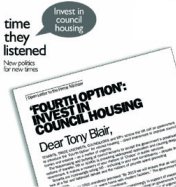
I’m glad that in spite of the NEC seeking remission of the Housing composite it went to a card vote. It should be passed. I imagine the card vote result will pop up at Bloggers4Labour before too much longer.
It is a disgrace that the Government have ignored the decisions of two successive Party Conferences to allow a level playing field for investment in social housing where council tenants want to remain council tenants.
Because the Government refuse to abide by Party policy, the newly elected Labour Council in Lambeth believes it has no option but to pursue an Arms Length Management Organisation (ALMO). This is one of the Government’s three options.
Tenants and housing workers in Lambeth are campaigning against the ALMO proposals because ALMOs are not a good idea. UNISON supports the fourth option (in line with Labour Party policy!)
Those (un)lucky enough to be in Manchester can find out more at the Defend Council Housing fringe meeting.
Will those who believe that Gordon Brown said that he would listen please watch carefully to see if he comes out in support of the fourth option? Don’t hold your breath. In the mean time you can sign online to support the fourth option.
Who is falling for Brown?
Having been disappointed at the official response of UNISON General Secretary Dave Prentis to what Gordon Brown had to say yesterday, I though I would check what the other big unions had to say, Paul Kenny of the GMB says it was a “speech of great substance”. Derek Simpson of AMICUS was even more glowing;
"This was a unifying speech and one which will reconnect the government with the wider party.
“Gordon Brown captured the mood of the movement and demonstrated that he understands the insecurities and the concerns that people are facing, on jobs, affordable housing, the health service and pensions.
"Gordon said that that he was listening and this can only be a good thing."
The TGWU have yet to post anything commenting on the speech (or if they have I can’t find it!), but do report on an opinion poll which found that;
Labour voters strongly want more action for working people (95%) and for British workers to have the same rights at work as those in Europe (96%);
91% believe the Labour government should be more proactive in supporting manufacturing, in Wales (100%) and Scotland (93%) the responses were even stronger;
60% do not want anymore involvement of the private sector in health and education;
81% want a British foreign policy that is more independent of the Bush administration in the USA;
Only 18% think enough has been done to protect pensions.
I fear you would search in vain through the text of Brown’s speech for commitments which meet these aspirations. Of course it is a good thing if someone promises to listen to the trade unions – but what matters is whether they take what they hear into account, and Gordon Brown is not saying anything that suggests that he will. Why not back someone who would?
Well said Kelvin!

Kelvin Hopkins, co-Convenor of the UNISON group of MPs sums up Gordon Brown’s Conference speech very well in today’s Grauniad;
"It was a speech that will just mean continuing the same New Labour policies. There was nothing on the fourth option for council housing [allowing councils to build more council houses]; nothing on changing the policy on Trident or stopping moves to privatise the NHS."
This is the serious problem with what Brown had to say – and is a much more interesting comment than that made – or not made - by Cherie (although I suppose she ought to be able to spot a lie better than most…)
Gordon Brown has made clear that he is not going to deliver for the unions – what are we going to do about it?
Monday, September 25, 2006
Don't Get Fooled Again?
Oh dear, the UNISON website now confirms that our General Secretary welcomed Gordon Brown’s Conference speech, stating that; “there was enough in his speech to give us hope that he will listen about the direction of reform”. Mind you “it was only in his emphasis on "the driving power of social conscience" and "community" that he hinted at a different approach to public services if he becomes prime minister.”
We should be happy because Gordon has “hinted” at a different approach to public services if he became Prime Minister? No we shouldn’t. If Gordon Brown wanted to reassure Labour supporters of his commitment to Labour values he should do more than hint.
If you read the whole text of Brown’s speech it is hard to see where these hints are to be found.
When Brown says;
“And let me say that the renewal of New Labour must and will be built upon these essential truths: a flexible economy, reformed and personalised public services, public and private sectors not at odds but working together so that we can truly deliver opportunity and security not just for some but for all.”
This is essentially a restatement of New Labour economic policies. A flexible economy, in their language, means one in which we don’t have proper trade union rights. And when the public and private sectors work together they do so to enable the private sector to take a profit out of public services. We should be fighting for trade union rights and public services, not congratulating a Labour leader with no commitment to either.
Brown was not at all dishonest about this. He said; “We can't just be pro-Labour we've got to be pro-business too.”
I have already commented on what Brown said about the NHS. What is clear is that he made no commitment to halt or reverse the tide of cuts and privatisation. As UNISON observes officially on the website;
“He did not however make any comment on the current market-driven reforms of the NHS through which the private sector has become involved in patient care and services such as NHS Logistics are being privatised.” If we are supposed to take this as a “hint” that he is not in favour of the privatisation which he imposed on the tube in London then I think it is just conceivable that we are fooling ourselves.
It is great news that NHS Together had a packed fringe meeting at Conference and that Dave Prentis laid down a challenge to Labour activists to back UNISON's motion to conference calling for a stop to the privatisation of NHS Logistics and a re-think on strategy, saying:"There are MPs who will join us on a picket line to save a ward in their constituency. Now they have got to have the guts to stand up and say enough is enough."
But surely Gordon Brown is also an MP, of whom we should be demanding that he say “enough is enough”. He didn’t. He won’t. He doesn’t deserve our support. We need another candidate who will back union policies.
What should the unions make of Brown?
So Gordon Brown is starting to tell us what he wants to do as Prime Minister. The whole speech is online thanks to the BBC.
Dave Prentis, our General Secretary reportedly said of the Chancellor’s keynote speech to Labour Party Conference: "This was a speech with vision, based on working together, something we have not heard for a long time." I hope this didn’t reflect any shift away from the commendable caution Dave showed in commenting on plans for a “board” to run the NHS. Dave rightly said that " The last thing NHS staff need at the moment is another gimmick. We've had reform after reform, pushing services into the private sector and we need to slow that down. We would want to know how any proposed NHS board would operate and how it would be accountable. It could end up with a board controlled by big business with the interests of big business being put before those of patients and the NHS. We would want to be reassured that the health service is not being placed in the departure lounge for privatisation."
UNISON has already told Party Conference to listen to its supporters. We won’t get far by praising the architect of privatisation – Gordon Brown.
Left-wing leadership challenger John McDonnell said Mr Brown’s speech had been "content-less" and was offering only more of the same.
That seems right to me – look at what Brown has to say about our NHS;
“But when some people say as they do, why all that modernisation? Why all these New Labour reforms? Why continue to change?
I tell the country:
This is not reform for reforms sake but reform to deliver the best service possible, and Britain cannot lead the world by standing still.”
At one level this is vacuous nonsense worthy of Tony Blair. It can all too easily be read, however, as a pledge for “business as usual” from a Government seemingly committed to dismantling our health service.
Also, we know that Brown would replace Trident nuclear submarines – and that Party Conference is not even going to be allowed to debate this issue.
Let’s hope the union leaders don’t fall for the illusion that they can have the influence with Brown that they used to tell us they had with Blair!
Sunday, September 24, 2006
Greedy stupid bosses back poverty pay

So the dear old bosses’ organisation – the Confederation of British Industry (as pictured above) are worried about the implications of increasing the minimum wage – to the extent of having issued a press release!
In its submission to the Low Pay Commission this week (20 September), the CBI warns that rising energy costs, lower 2007 growth forecasts and the increasing cost of employment regulation mean that the economy simply cannot accommodate further heavy minimum wage rises.
Somehow I don’t think that either the author of the press release or the suit who approved it are getting by on £5.35 an hour.
The CBI follow in the footsteps of those early nineteenth century capitalists who opposed restrictions on child labour. I particularly like Andrew Ure who famously observed;
“I have visited many factories, both in Manchester and the surrounding districts, during a period of several months and I never saw a single instance of corporal punishment inflicted on a child. The children seemed to be always cheerful and alert, taking pleasure in using their muscles. The work of these lively elves seemed to resemble a sport. Conscious of their skill, they were delighted to show it off to any stranger. At the end of the day's work they showed no sign of being exhausted.”
Economists of the day seriously argued that working hours could not be reduced because “the whole net profit is derived from the last hour.” Of course this turned out to be nonsense. Indeed it was the success of the trade unions in limiting working hours which compelled capitalists to look for new ways to increase labour productivity (what Karl Marx called the strategy of “relative surplus value”) – leading to the growth in output and living standards over the past century and a half.
If there are sectors of today’s economy which can only thrive on the basis of poverty pay then the bosses in those sectors are stupid as well as greedy and they, and their friends in the CBI need to be treated with the contempt they deserve. What we, as trade unionists and socialists need is a candidate for leader of our party who will stand up for the rights of workers and not someone who wants to suck up to the bosses – now who could I mean?
Thursday, September 21, 2006
Good luck to the NHS Logistics strikers
Good luck to the UNISON members about to start their first 24 hour strike at NHS Logistics. This is a dispute caused by the Government’s daft decision to privatise a vital part of our health service. Read the latest news about the dispute here.
Get the full information about the dispute here. Send a message of support via the UNISON website by clicking here. And get the information about how to contact your Member of Parliament to lobby them about the dispute here.
I am only sorry not to have been able to join some other comrades from the Greater London on a trip to the picket line this evening.
Wednesday, September 20, 2006
Support strike to save our NHS
UNISON members employed by NHS Logistics start national strike action tomorrow.
Around 900 staff were balloted by UNISON, with 74% voting for strike action on a 66% turnout."Our members at the five NHS Logistics depots voted overwhelmingly for the strike action," said UNISON head of health Karen Jennings."They have a very strong sense of loyalty to the NHS and have worked hard to make NHS Logistics a highly competitive, innovative NHS service. "Last year it delivered savings to trusts of £2.8 million: cash that can be ploughed back into front-line services."NHS Logistics has a fantastic track record on innovation and awards for efficiency. There can be absolutely no justification for privatising this service."HS Logistics is a not-for-profit organisation supplying hospitals, GP surgeries and patients with more than 43,000 items including essential surgical supplies and products such catheters, hand-gel, swabs, bandages, disposable bedpans and food.
Patricia Hewitt may want more private sector involvement in our NHS, but UNISON members do not. Opinion poll evidence shows that we have majority public support for our opposition to further privatisation. As Keep Our NHS say in their recent press release – privatisation is also the cause of cuts in our NHS.
We can’t all be on the picket lines at NHS Logistics but we can all give political support to this important struggle.
UNISON is encouraging branches and members to write to their local MP to urge them to tell Health Minister Andy Burnham why NHS Logistics must remain part of the NHS and staff must not be outsourced.You can contact your MP via the website: www.writetothem.com
Below are some key points you may wish to include in your letter.
NHS Logistics provides the health service in England with an enormous range of critical products – from thermometers and syringes, to baby milk and patients’ slippers and bandages to cleaning products.
The non-profit organisation helps the NHS reduce costs and free up much-needed resources for patient care. And it has won numerous awards for doing this.
Last year (2005) £3m was returned to NHS trusts as a value rebate - will the shareholders of a private company be generous enough to share their profits with the NHS?
We believe the decision to outsource the work of these loyal and committed staff was taken without proper consultation - UNISON believes that there is no viable business case for this decision and has told ministers so - they are not listening.
We know that this decision has been taken purely for financial reasons, based on potential savings for the NHS, but we believe that cost cutting will reduce the quality of the products purchased for the NHS to use.
NHS Logistics delivers directly to hospital wards and operating theatres. Getting it wrong could be a matter of life and death - should this be left to a parcel delivery company?
Patricia Hewitt thinks it should, but only Tony Blair agrees with her (and perhaps some of the less intelligent shareholders in DHL...)
Subscribe to:
Posts (Atom)